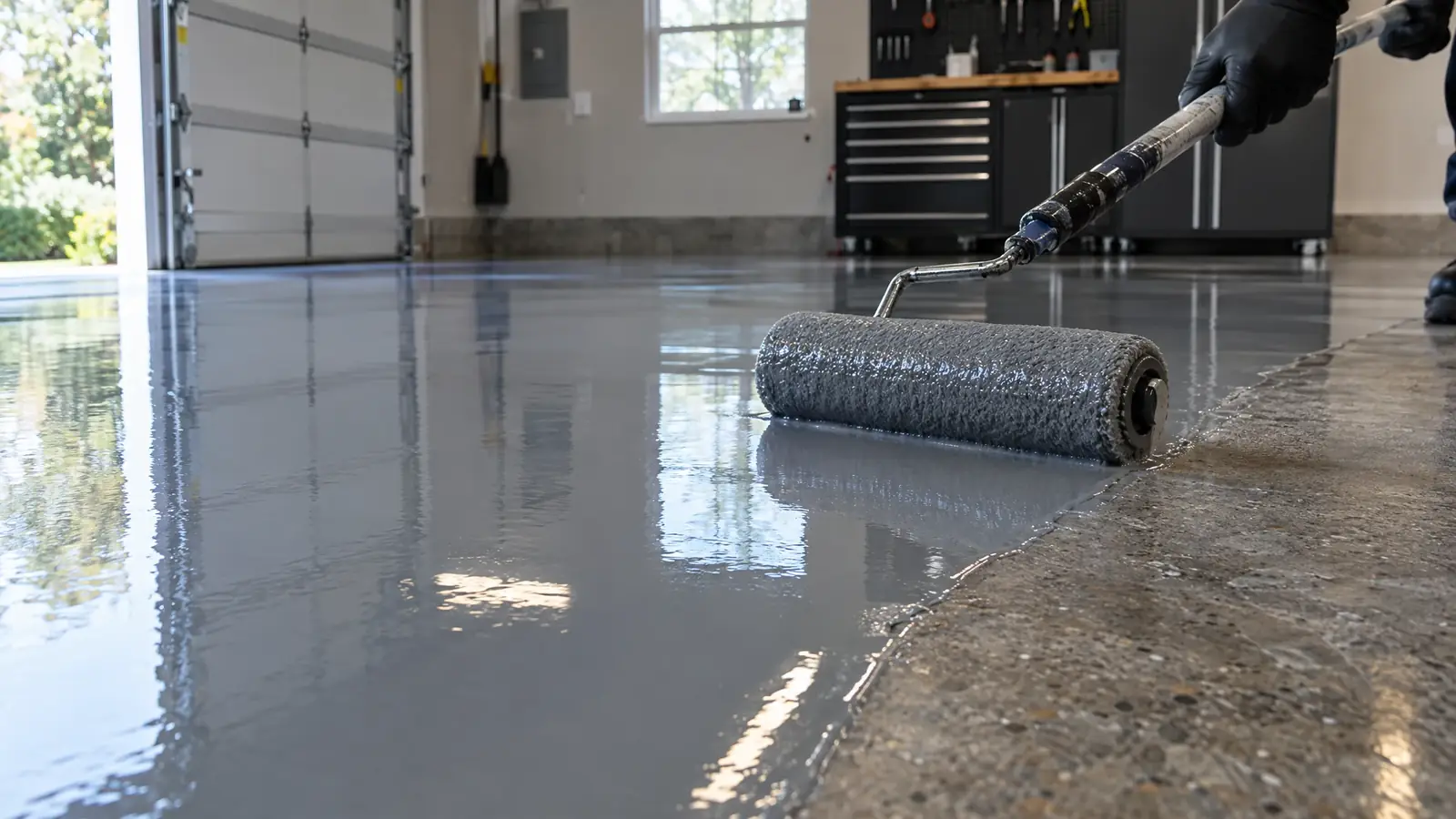
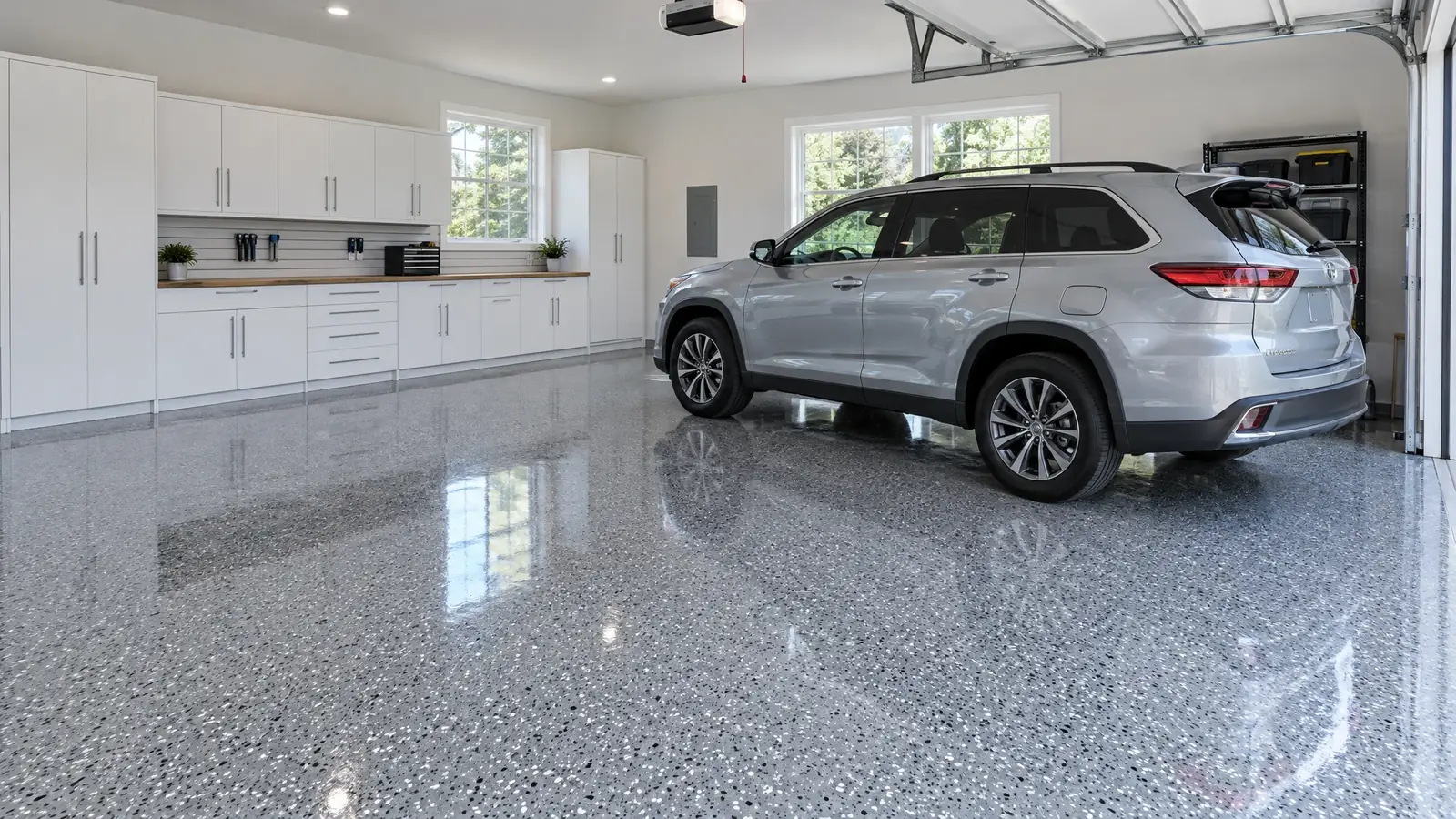
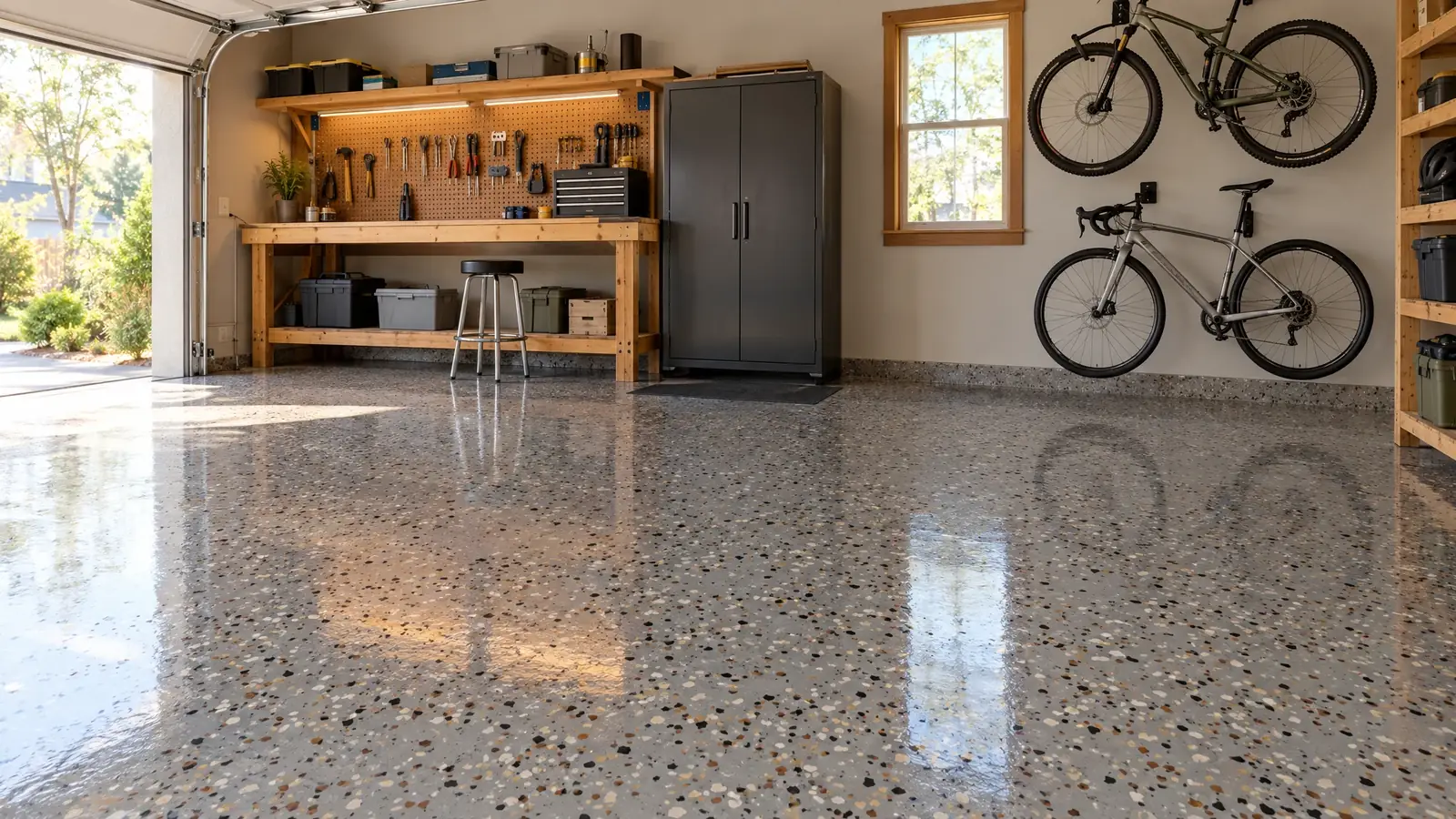
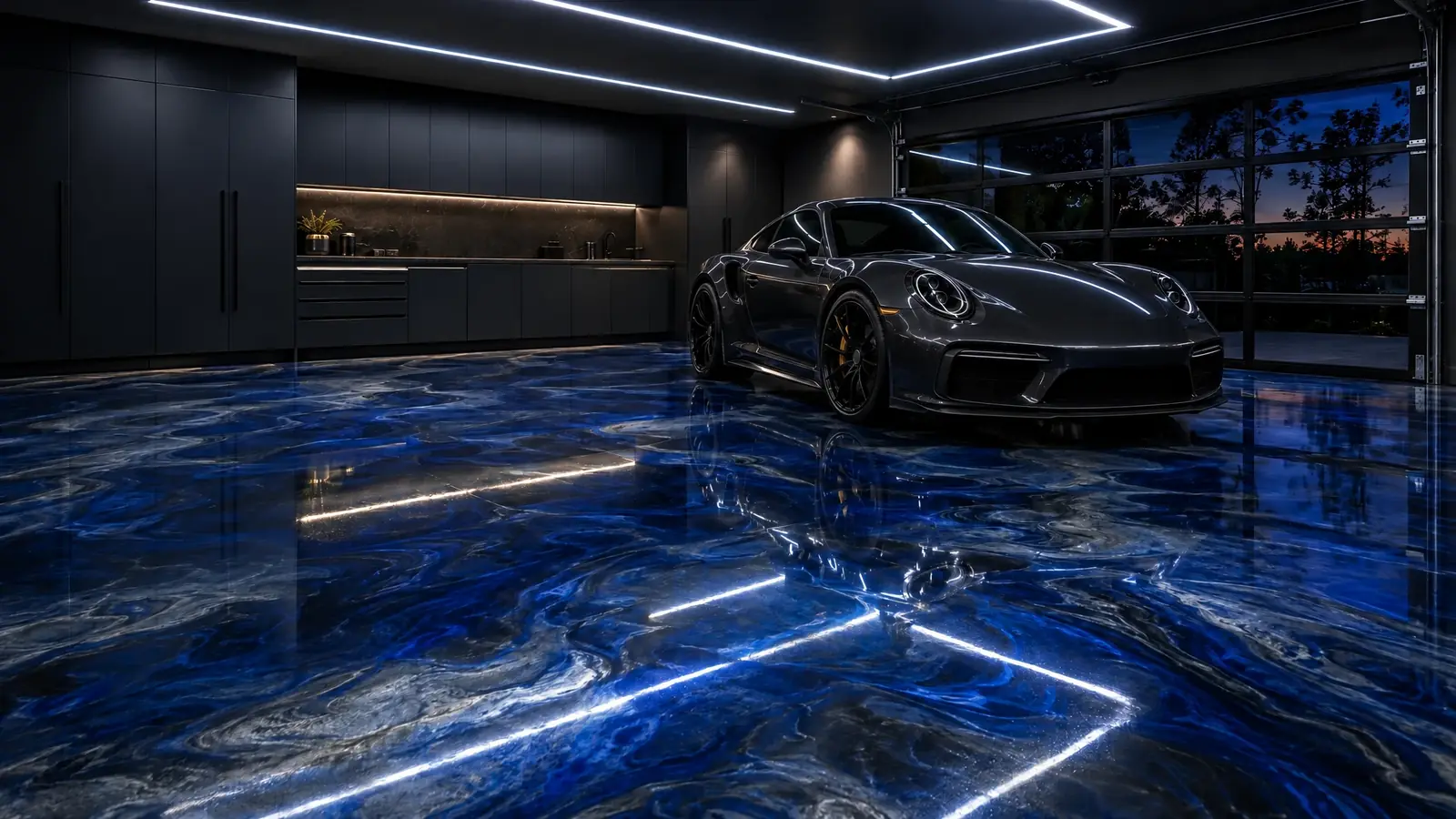
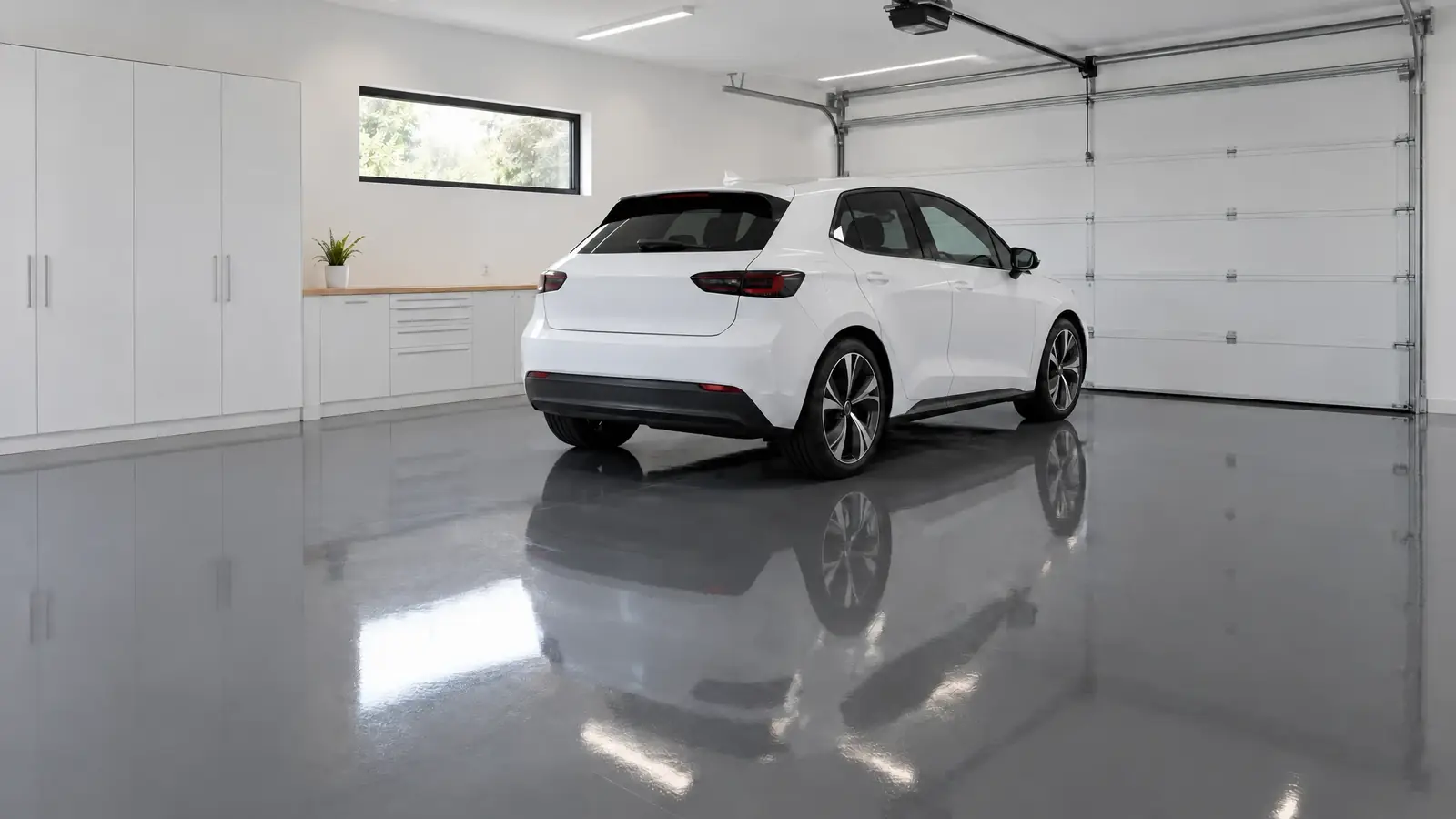
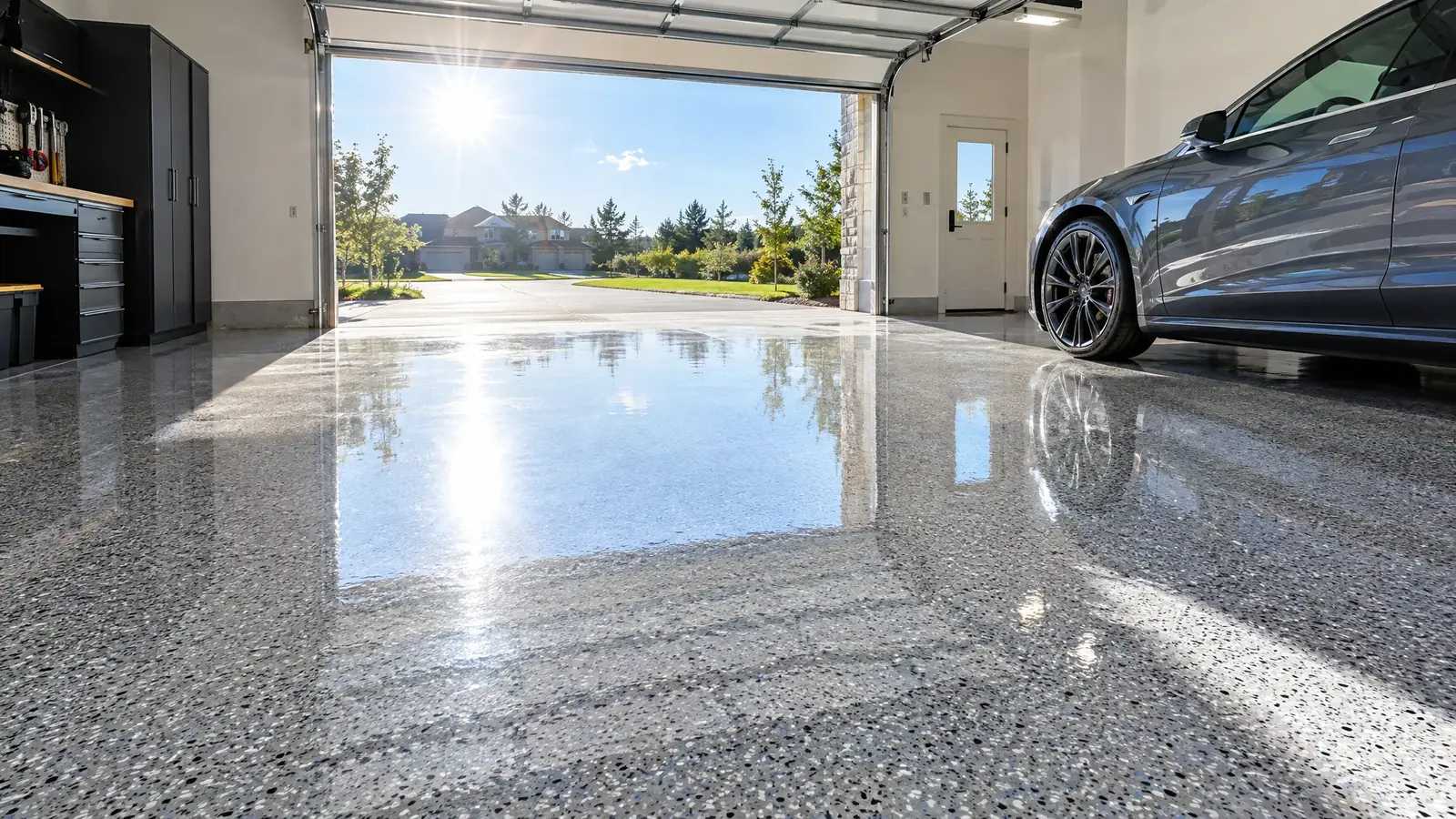
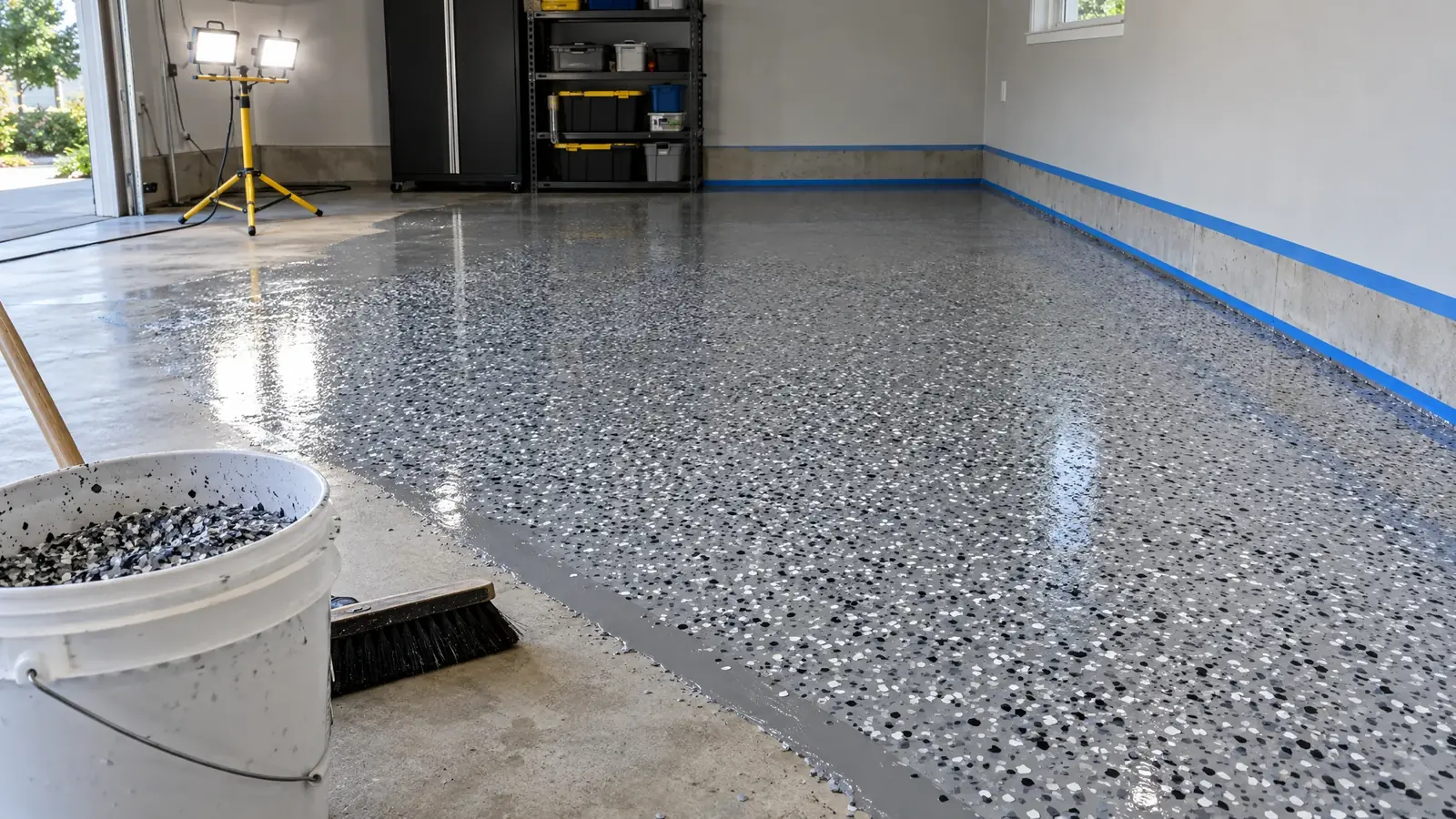
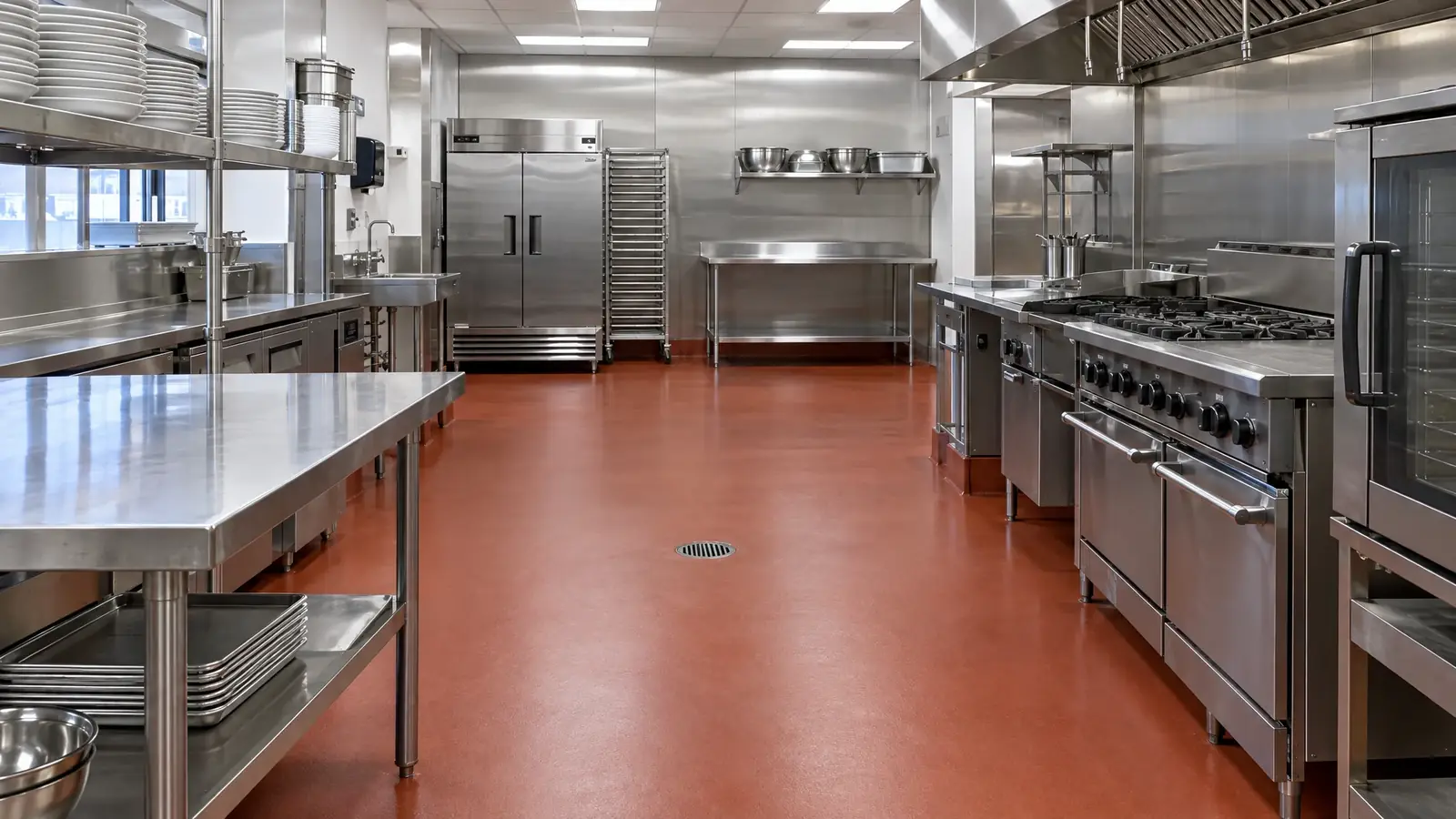
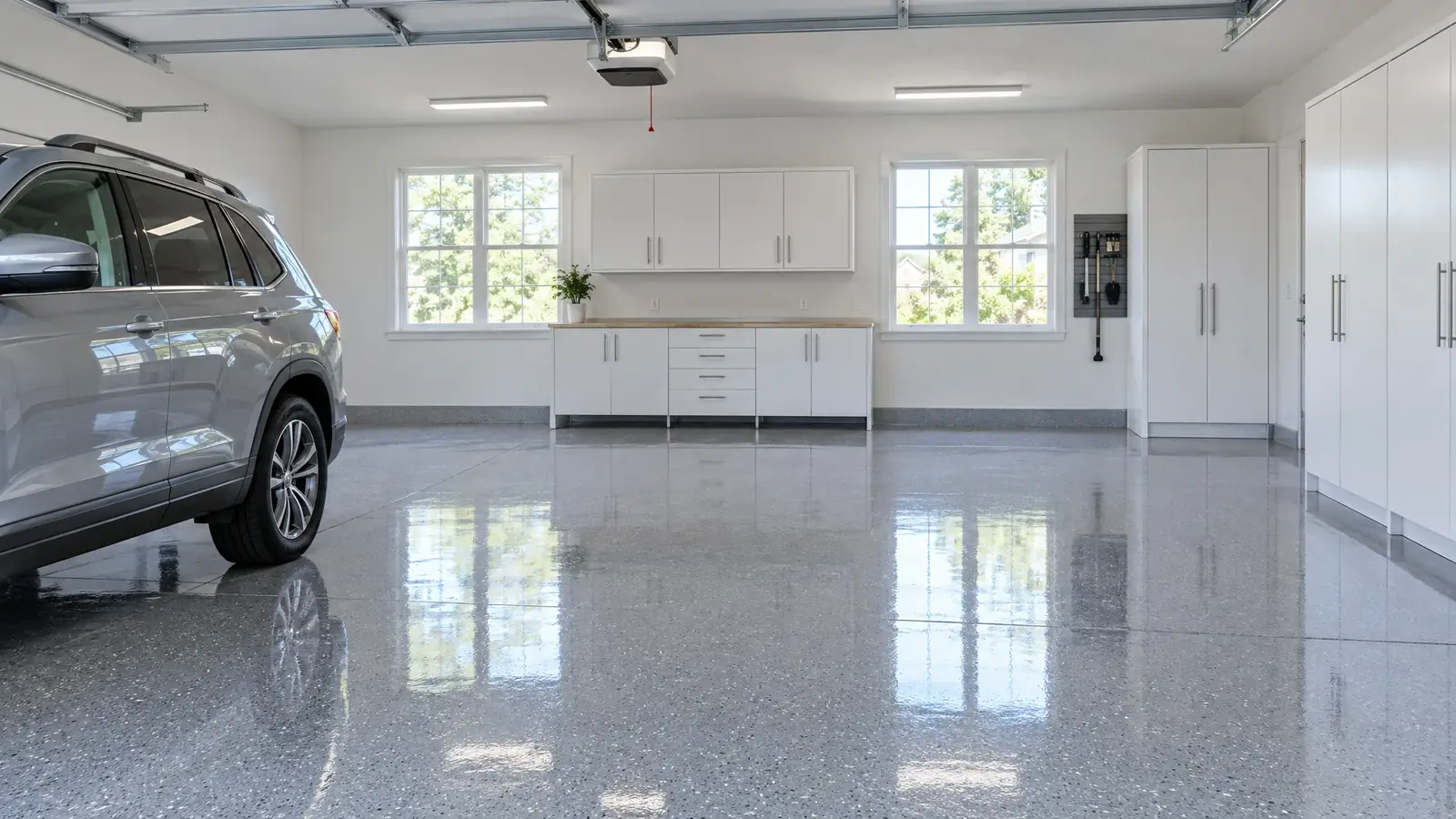
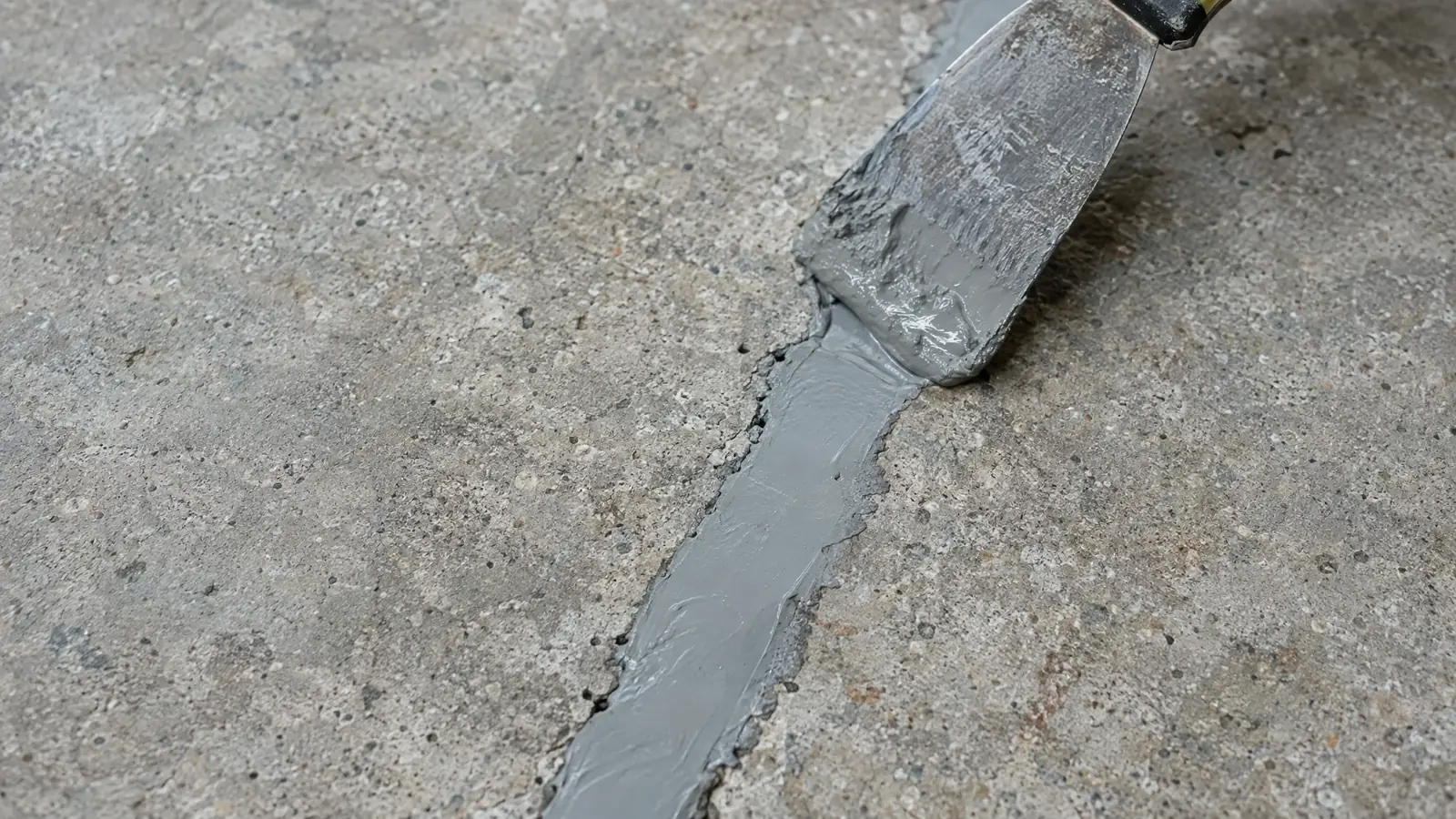
Epoxy is a two-part resin and hardener that bonds tightly to properly prepared concrete and builds a thick, seamless film. It is the most versatile coating we install: it carries flake, metallic pigments and quartz beautifully, fills tiny surface flaws and delivers a deep, glossy look at a friendly price.
Epoxy cures more slowly than the newer chemistries and, left exposed, light colors can slowly amber in strong sunlight. That is why we often pair an epoxy base with a UV-stable polyaspartic or urethane topcoat, giving you epoxy’s depth with the clarity and toughness of the top layer.
Strong adhesion
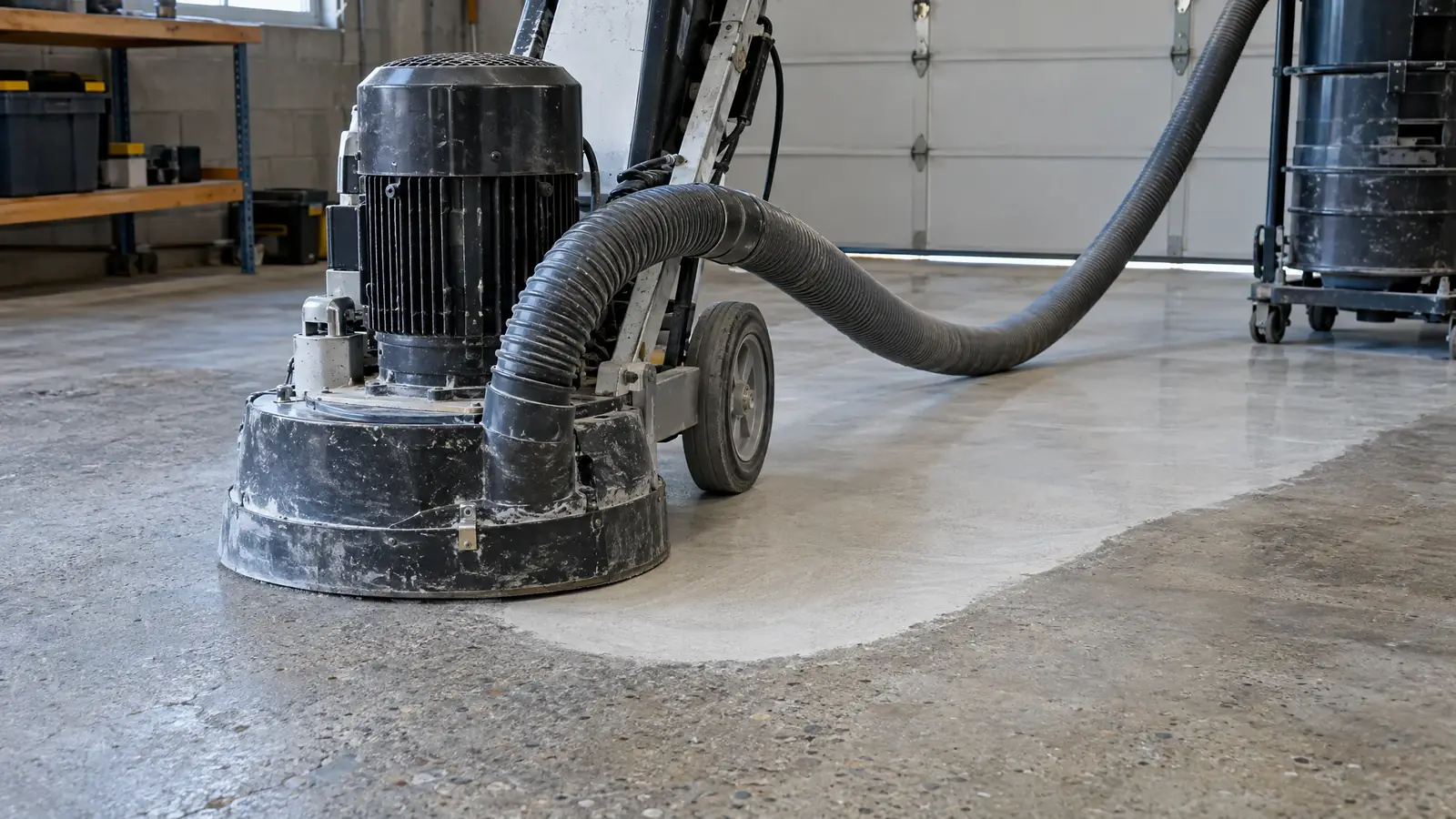
Epoxy grips diamond-ground concrete and pairs with primers for stubborn slabs.
Deep decorative build
The thick film suspends flakes and metallic pigments for rich, dimensional floors.
Seamless and easy to clean
No grout lines or pores, so spills wipe up and dust stays off the slab.
Great value
A premium look without a premium chemistry price tag.
Performance profile
Epoxy by the numbers.
General, product-dependent guidance on how this chemistry typically performs. Longer bars are better.
Cure speed2/5
UV stability2/5
Hot tire resistance3/5
Flexibility2/5
Abrasion resistance3/5
Chemical resistance4/5
Moisture tolerance3/5
Value for money5/5
Decorative depth5/5
Ratings are general guidance, not product specifications. Your installer’s chosen products and your slab’s condition decide the real result.
It depends on prep, product, sun exposure and use. Well-prepped, properly topcoated floors in homes often serve for many years. We explain the realistic expectation for your garage.
Will epoxy peel from hot tires?
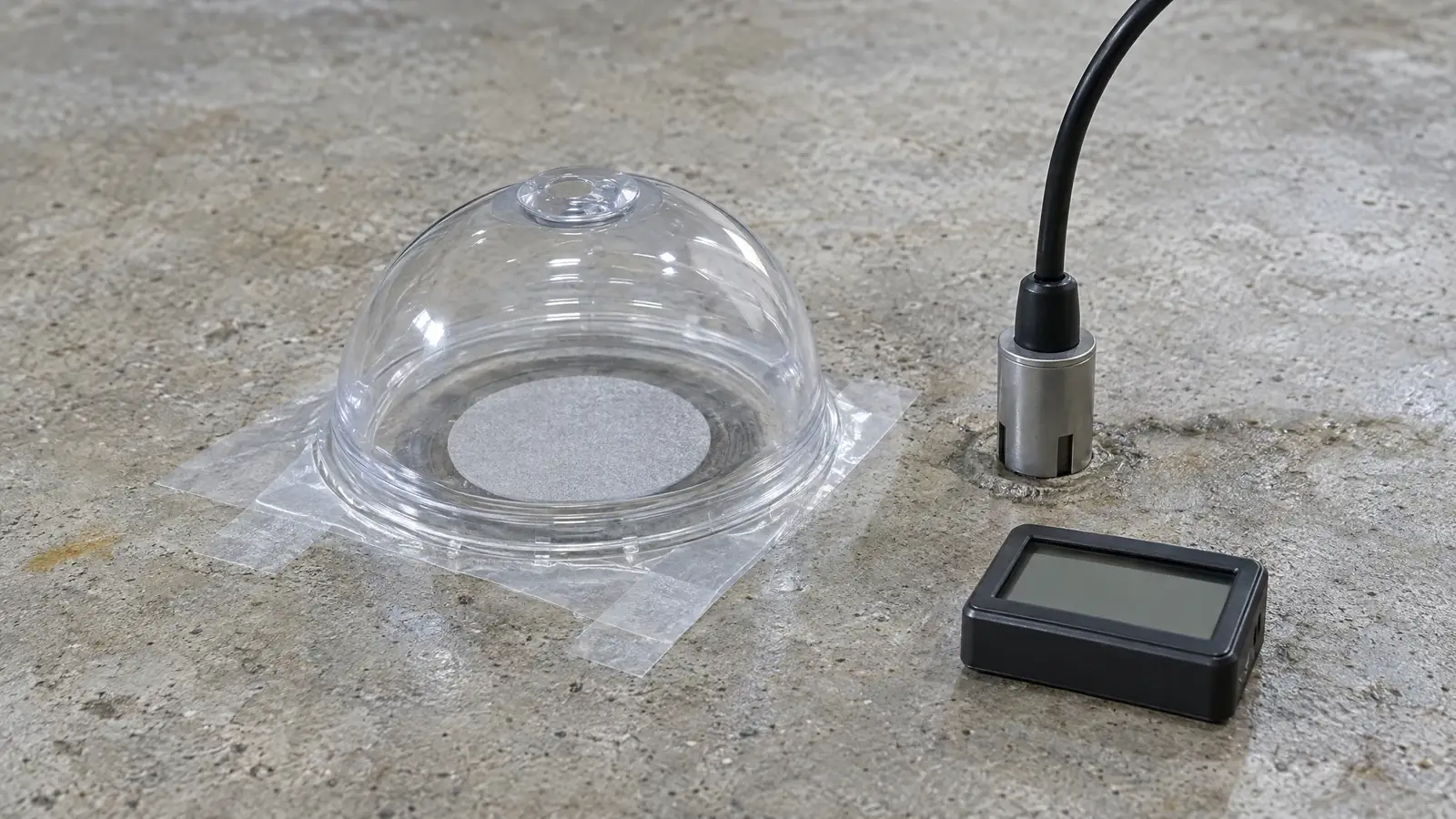
Peeling usually traces back to poor prep, moisture or low-quality kits. A professionally prepped system with a suitable topcoat is built to handle hot tires.
Can epoxy go outside?
Epoxy is best indoors. For patios and sun-exposed areas we usually recommend a UV-stable topcoat or a polyaspartic system.